Lower Bazaar
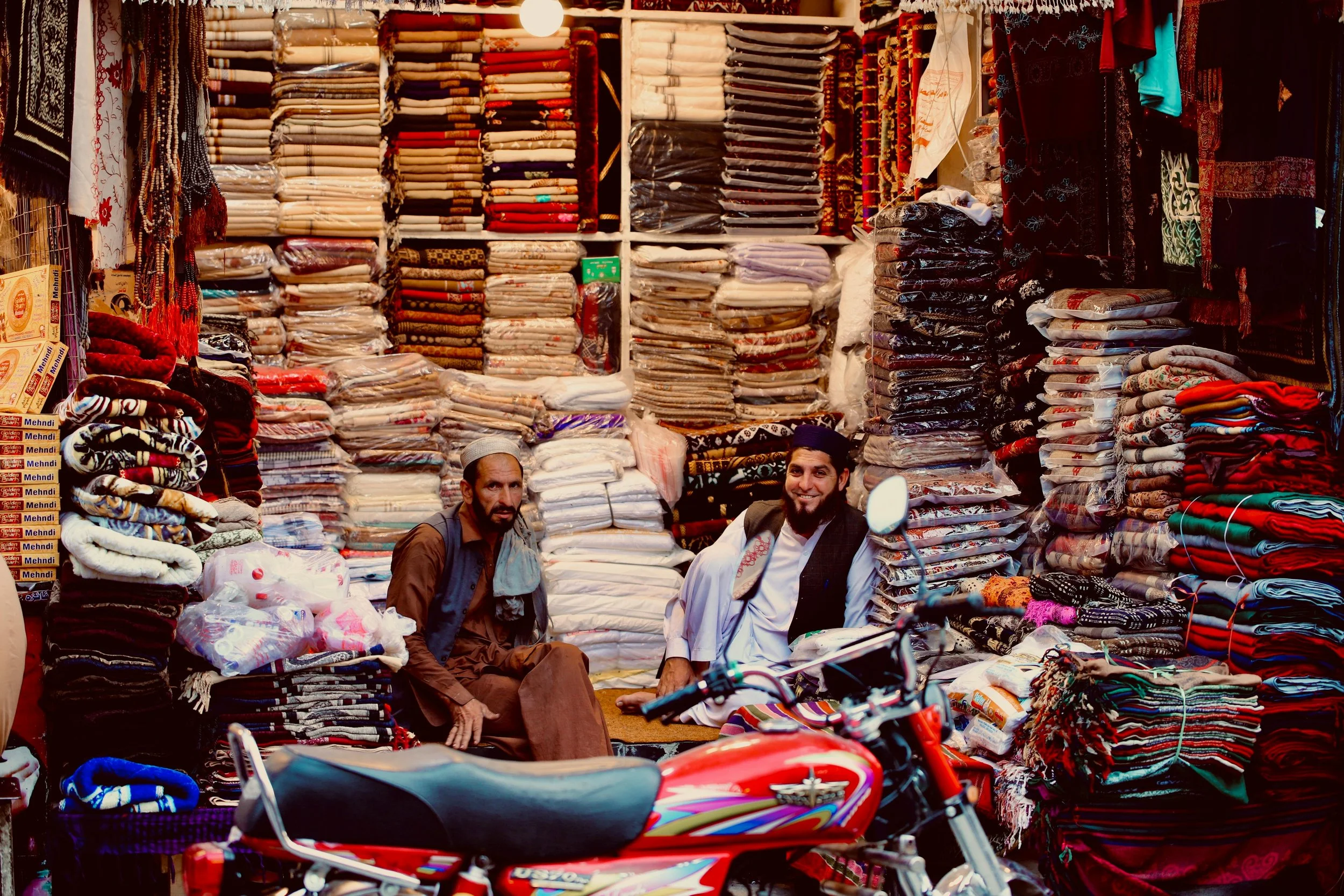
Photo by Zeeshan Kahn
In the quiet hill station town of Murree, daily life revolved around two shopping areas: the Upper and Lower Bazaar. Girls from my school were only permitted to visit the Upper Bazaar with its wide-open spaces, tourist shops, and restaurants. The Lower Bazaar, by contrast, was a narrow street packed with shops tucked among old colonial buildings as it wound down the hillside. Only the boys from school were allowed to visit the Lower Bazaar, a rule that felt unfair to me at the time.
In the Lower Bazaar were fabric shops and tailors who could make anything you wanted just by looking at a picture from a Sears catalog. There were plenty of goldsmiths, metal workers, leather workshops, and vendors who made and sold string and jute.
I discovered an unlikely talent for tying knots, thanks to an after-school macrame class. With my entrepreneurial bent, I came up with the idea of starting a business to make and sell macrame owls for every girl in my dorm. But to accomplish my dream, I needed jute.
One afternoon, I lingered at the entrance to the Lower Bazaar, my heart pounding, scanning for danger. I knew I was breaking a rule meant to keep me safe, but I couldn’t help myself.
A young woman sat on a dirty red cloth at the entrance to the Lower Bazaar. She rocked, chanting in whispers, her face partly hidden by a thin headscarf. She held out her hand, waiting for someone to give her alms; they had to. In front of her was a baby with thick black hair lying naked on its stomach. I couldn’t move, frozen in a crowd of gathering men, their eyes fixed on me, not my repulsion. I wasn’t a stranger to beggars. I had seen them on the streets in Rawalpindi and looked away, but this time, I couldn’t.
The baby was a boy, his torso squared and soft like a sack of wheat flour jiggling to the rhythm of a Bollywood song playing in a nearby tea shop. He stopped to nudge a toy car across red ridges like mountains with the tiny stump of his only appendage. He noticed me, a white face in the crowd, and sweetly smiled, unaware of how different he was or that his life was a predestined tragedy.
Overwhelmed, I returned to the safety of the Upper Bazaar, glancing back only to find those black kohl-rimmed eyes following me.
Later that afternoon, the bus ride back to school felt heavy with the weight of what I had witnessed.
“Don’t worry, you get used to it,” Mary said. “It’s a really bad problem, especially in the big cities. Some people say those beggars are like that on purpose, born whole and butched to make more money.”
“What do you mean?” I asked.
She hesitated, then continued. “There are people out there, desperate enough to survive, who will do just about anything to anyone. A destitute mother with a normal child only earns so much money begging for alms. But the other way, you know.”
I knew. The truth sank as I stared past the window at the pine trees and snow-capped Himalayas, afraid to close my eyes. The haunting image of suffering and innocence bore a hole in my head that would never be filled. Desperate to shake, helplessness overcame me like a shadow.
Life moved on, but something inside me had changed. The macrame owls I made became popular and supplemented my meager thirty-cent allowance. And the jute I needed to macrame those owls came from the Lower Bazaar. I didn’t go there to buy it. I couldn’t. A boy went there for me.
Even now, I find myself thinking about the baby in the Lower Bazaar, a hostage to a violent, tragic life he never chose. That baby, that boy, that man will never remember the moment our lives intersected, but I can’t forget it.
