Buster Browns
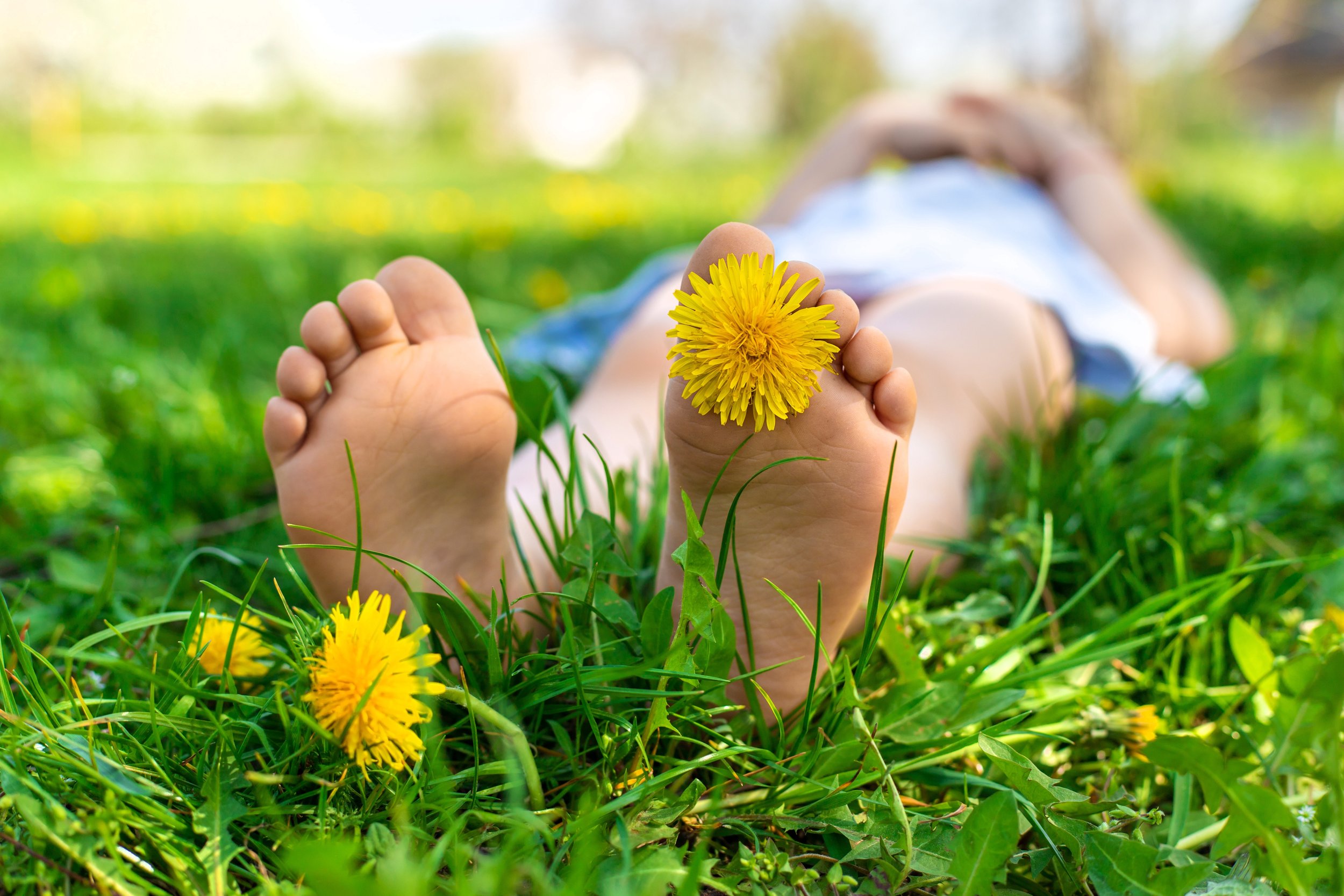
Photo by Shutterstock
I ran home from the last day of fourth grade, kicked off my shoes, hid my report, and changed into play clothes. Summer had finally arrived at Happy Acres Trailer Park, and I couldn’t wait to go outside and play.
In the mirror on the back of my door, a girl in her brother’s old cut-offs, tangled hair, and emerald cat-eye glasses grinned back at me. We were a pasty-white pair, but not for long; soon, we’d be a toasty shade of brown. Our toes wiggled like earthworms, happy to be free.
I peeked from my bedroom. Mom sat at the kitchen booth, cutting recipes from a stack of ladies’ magazines. Poom sprawled in a sunbeam, blocking the sliding glass door, his midnight fur glowing. Like me, he was an indoor cat who wanted to be outside, where the world felt wide open and free. I tiptoed down the hallway, but the trailer creaked, and Mom looked up.
“How was your last day of school, Miss Petuna?” she asked. “Where’s your—”
Before she could finish, Poom and I bolted out the slider and vanished.
Barefoot was a summer rite of passage. For the first week, I was a tenderfoot, scorching my soles on the asphalt, stepping on goat heads, and trampling honey bees. My big toe was often a bloody mess from the uneven sidewalks. But by the Fourth of July, my soles were blackened, sturdy as moccasins, and I ran like a gazelle over gravel.
On a blazing August afternoon, I told my friends I’d be right back. Darting from the shade of one mulberry tree to the next, over sidewalks and blistering asphalt, I ran home to pee, and ended up at Sears.
I stopped at the butterfly bush to cool my feet and crossed my legs to hold the urge. Monarchs, Painted Ladies, and Swallowtails swarmed the orange blooms, oblivious to me. If I wanted, I could’ve caught a bazillion butterflies, but I didn’t need any more; my Critter Catcher under the bed was already packed with cocoons ready to hatch.
Old Mr. Carol lived next to the butterfly bush. Water gushed from his trailer space, across the sidewalk, and into the gutter. It wasn’t like him to forget his sprinkler like that.
Inside his chainlink fence, beside the lemon-yellow trailer, was a strip of hybrid Bermuda, the only fancy grass in Happy Acres. Every Saturday, Old Mr. Carol mowed it tighter than the indoor-outdoor carpet in my living room. He trimmed the edges with sewing scissors, and hosed ants off the patio where red nectar dripped from the hummingbird feeder. He was particular.
So was Mom.
Old Mr. Carol had a row of wind chimes hanging from his awning. Japanese pagodas pinged, brass pipes donged, antique silverware clinked, and bamboo stalks clucked. My favorite was the one made of seashells and sand dollars strung from driftwood; it reminded me of Pismo Beach, in a good way. On lonely nights, when I couldn’t sleep, and my legs ached from growing, Old Mr. Carol’s wind chimes kept me company.
They kept Mom awake at night.
Most afternoons, Mr. Carol sat on his patio rocker, a watchdog guarding Happy Acres. He puffed his pipe, sipped Lipton’s iced tea from a mason jar, and played country music a little too loudly on his transistor radio. When I hunted butterflies, he’d call out, “Good for you!” or “You almost got that one!” I knew Old Mr. Carol was lonely. His wife was long gone, his kids were too busy, and Mr. Wiggles died at Christmas. He said Mr. Wiggles was extra special, living to a ripe old age of eighty-six in people years, impressive for a poodle, though not close to the 175-year record for a wiener dog. Mr. Carol figured nothing needed to live that long.
Mr. Carol’s car was gone. I let myself into his yard and turned off the sprinkler, noticing his grass was a saturated mess. I wanted to, but left it to my imagination, run and slip and slide across that grass on my belly until the pink flamingos at the gate stopped me. Just thinking about it made my bladder tighter than a tambourine.
Bursting through the gate of my trailer space, I jumped onto a clump of crabgrass to cool my bare feet and grabbed my privates, danced in place, and waited for the urge to pass. I couldn’t let Mom see me like that. She hated it when I came home desperate. “If you can’t pay attention to when you need to urinate, you have no business playing outside.” I was pretty sure Mom was the only person on the planet who said, “urinate.”
I only made it as far as the trailer steps. I plopped down and wiggled until the urge to pee passed again.
My summer shoes were by the steps, right where I’d left them. Every year, Mom bought Brother and me summer shoes from TG&Y. She called them Zoris, which she said originated in Japan, but to me, they were just cheap rubber flip-flops. My feet were too narrow for them anyway, and I hated the way they snapped when I walked. Flip-flops always found their way into bike spokes, and once, I slipped on a wet sidewalk and knocked the wind right out of me. Barefoot was a lot safer.
I climbed the wooden steps and opened the sliding glass door. Poom tried to escape, but I blocked him with my foot, and he slinked away. The ironing board stood in the middle of the living room, angled toward General Hospital. The iron light was blinking red, and Mom was nowhere to be seen. Stacks of wrinkled clothes, mostly Dad’s work shirts and a bunch of red bandannas, covered the coffee table. Dad never used Kleenex.
Tiptoeing through the living room and down the hallway, I paused under the swamp cooler by my bedroom door long enough to catch a few goosebumps. I wondered, could I sneak into the bathroom, pee, not flush, and get back outside without Mom noticing? If I pulled it off, I wouldn’t have to come home again until dinnertime, which was fine by me!
I took two steps, looked inside my bedroom, and there was Mom, sitting on my bed, stuffing my favorite winter coat into a grocery sack.
“Oh, good, you’re home,” she said. “I just went through all your clothes. I need you to try on a few things to see what fits and what doesn’t because tomorrow we’re going back-to-school shopping at Sears.”
I groaned and hobbled to the bathroom.
There isn’t much to do in a bathroom when you’re finished and trying to waste time, so you don’t have to try on clothes. I made faces in the mirror, peeled a hangnail with my teeth, and snuck a few cherry Sucrets from the medicine cabinet. Candy always made me feel better. The last place in the world I wanted to be was at home with Mom on a perfectly good day.
Mom emptied my closet and drawers into piles on my bed. Stack one: hand-me-downs, since I didn’t have cousins, mine went to the Salvation Army. Stack two: mending. If a dress was too short, Mom let it down to squeeze out another year. Stack three: mostly underwear, too far gone to save with bleach, and my old school shoes on top.
Being half-naked in front of Mom was almost as bad as being half-naked before Dr. Almclove. She made me try on everything, pinning hems and taking in seams, poking me often as she checked her work. “Stand up straight. Hands to your sides,” Mom snapped.
She knelt and measured from the hem of my skirt to the floor with a yardstick.
“Maybe we should aim for an inch longer,” she said. “What do you think?”
I couldn’t have cared less about that skirt. All I cared about was Brother walking down the hall and peeking in on purpose to catch me half-naked. I folded my arms over my bare chest.
“Are you even listening to me? Stand up straight,” she barked.
Mom stood, her knees cracking like popcorn.
“Since you don’t have an opinion, I’m pinning this hem at two inches. At the rate you’re growing, it’ll be a mini skirt by Christmas.” I had plenty of opinions, but couldn’t say them out loud. For one, I thought it was silly that my dresses kept getting longer while all the girls at school had short ones.
When Mom was done with me, she made a back-to-school list for Sears: two dresses, one skirt, four pairs of colored tights with matching turtlenecks and knee-highs, a coat, panties, undershirts, and school shoes. She left with her list and went outside to smoke another cigarette, her fourth. I sat down among the hand-me-downs and throwaways, watching the girl in the mirror begin to cry.
There was no way I could tell Mom the jumper she sewed from blue-and-white mattress ticking was stiff and ugly, or that the green polka-dot dress with the tatted collar Grandma made was bad luck. That was the dress I wore the day I tripped on the playground in front of the boys in third grade. I scraped my knee, but the worst part was when my dress flew up, and they saw my underwear and laughed. I wanted to tell Mom that all the girls at school wore shorts under their dresses so they could swing on the bars without boys gawking. But whenever I tried to say what I liked or wanted, I felt like a fly on a Black Widow’s web: the more I struggled to get the words out, the faster she closed in, until I gave up in tears and she left for a cigarette. If only I could tell her I wanted Buster Brown shoes with fringes over the laces, and a Partridge Family lunchbox instead of a paper sack.
The next morning, we went back-to-school shopping at Sears. Mostly, I trailed behind Mom in the girls’ department. She moved through the size 6X rack like a typewriter, working from one end to the other before starting on the next. If anyone got too close, she shot them a look, and they quickly moved farther down the rack.
“What do you think of this simple blue dress? I like the collar,” she said, then scrunched her nose and put it back. “Never mind. How about this simple beige corduroy jumper, or the green one?”
Mom liked simple everything.
“Turn around.” She held the jumper to my back. “Looks long enough, has a good-sized hem, and I bet if we paired it with matching knee highs and Mary Janes, you’d be the spitting image of Twiggy.”
Twiggy was a fashion model Mom adored, with short blonde hair and huge eyes. I couldn’t see the resemblance; my hair was dark and scraggly, my eyes were squinty, and I was only nine. Skinny was the only thing we had in common.
“Do you see anything you’d like?” Mom asked.
I pointed to a mannequin of a girl in a soft pink party dress with a lace collar and poofy sleeves. The dress was pretty, but the white patent-leather coin purse belt at her waist made it spectacular.
“No,” Mom said. “Clearly, that’s a church dress. We don’t go to church, so there’s no reason to buy one. Find something more practical, simple.”
I browsed a rack of skirts and found a short green-and-blue plaid Scottish kilt. The best part was the giant shiny gold safety pin securing the front flap. I showed it to Mom and held my breath.
“No,” she said. “You’d lose that pin in no time, and I’d end up stitching the flap shut. Besides, it’s too short for a girl your age.”
Everything I liked, Mom didn’t, so I gave up and trailed behind her with an armful of clothes. In the dressing room, I knew what it felt like to be a mannequin, rigid and emotionless, while someone dressed you in clothes they thought you should wear. Mom picked out everything, even the two packs of simple white underwear.
Loaded with shopping bags, we made our last stop at the crowded shoe department. While Mom browsed the displays for simple shoes, I slumped in a chair and waited for a salesman to measure my feet.
“Hello there, little lady. What can I help you with today?” The salesman flicked his tie over his shoulder and knelt to unbuckle my sandals.
I stood and put my right heel in the cold measuring device while he adjusted the toe and width sliders to fit.
“Looks like you’re about a five and a half, little lady. Are we looking for anything special today?” he said.
I stared at him like he had three heads, not knowing what to say.
“Okay, let me ask you this way: if you could have any pair of shoes in the whole wide world, what would they be?”
With Mom out of earshot, I blurted, “I want Buster Brown shoes with fringes over the laces!”
Mom returned with an armful of simple shoes, and the salesman disappeared behind the curtain to find my size. Soon, I was surrounded by shoe boxes and a smooth-talking salesman with a shoehorn. Mom liked him; he made her laugh. She didn’t even flinch when he brought out the wrong shoes and convinced her to buy them anyway.
Before I knew it, the first day of school had arrived. Mom laid out the Twiggy jumper, white short-sleeved shirt, and knee-highs. As I dressed, I thought about Anita and wondered if she missed me as much as I missed her. I thought about playing tetherball, making clover chains at recess, and drawing in the dirt with Ethel. I wondered if this would be the year I’d finally learn how to flip off the bars and land on my feet.
“Hurry up, you’ll be late for school!” Mom yelled from the kitchen.
I said goodbye to summer, slipping my feet into new school shoes. In the mirror on the back of my door, I saw a confident fifth-grade girl wearing Buster Browns grinning back at me.
Mom stood on the steps in front of the sliding glass door, wrapped in her white bathrobe, pink curlers peeking from her headscarf. She opened the door just enough for Brother and me to squeeze through, and Poom darted for the gap. She scooped him up like a football, holding him tight.
I stood next to Mom on the steps, but we were miles apart, both staring at the shed as if that would make Brother get his bike out any faster. Mom insisted we leave for school together, saying it was safer to travel in pairs, especially down Robert’s Lane. But as soon as we left Happy Acres, I was left on my own.
Brother closed the shed and walked his bike to the gate where mine was parked. As he passed, he looked me straight in the eye. “I’ll race you,” he laughed, and peddled off without me.
“You'd better catch up,” Mom said.
There were no farewell kisses or good-first-day wishes for me. Mom reached into her pocket and handed me an envelope of milk money. She warned me not to lose it, then went inside and shut the door.
